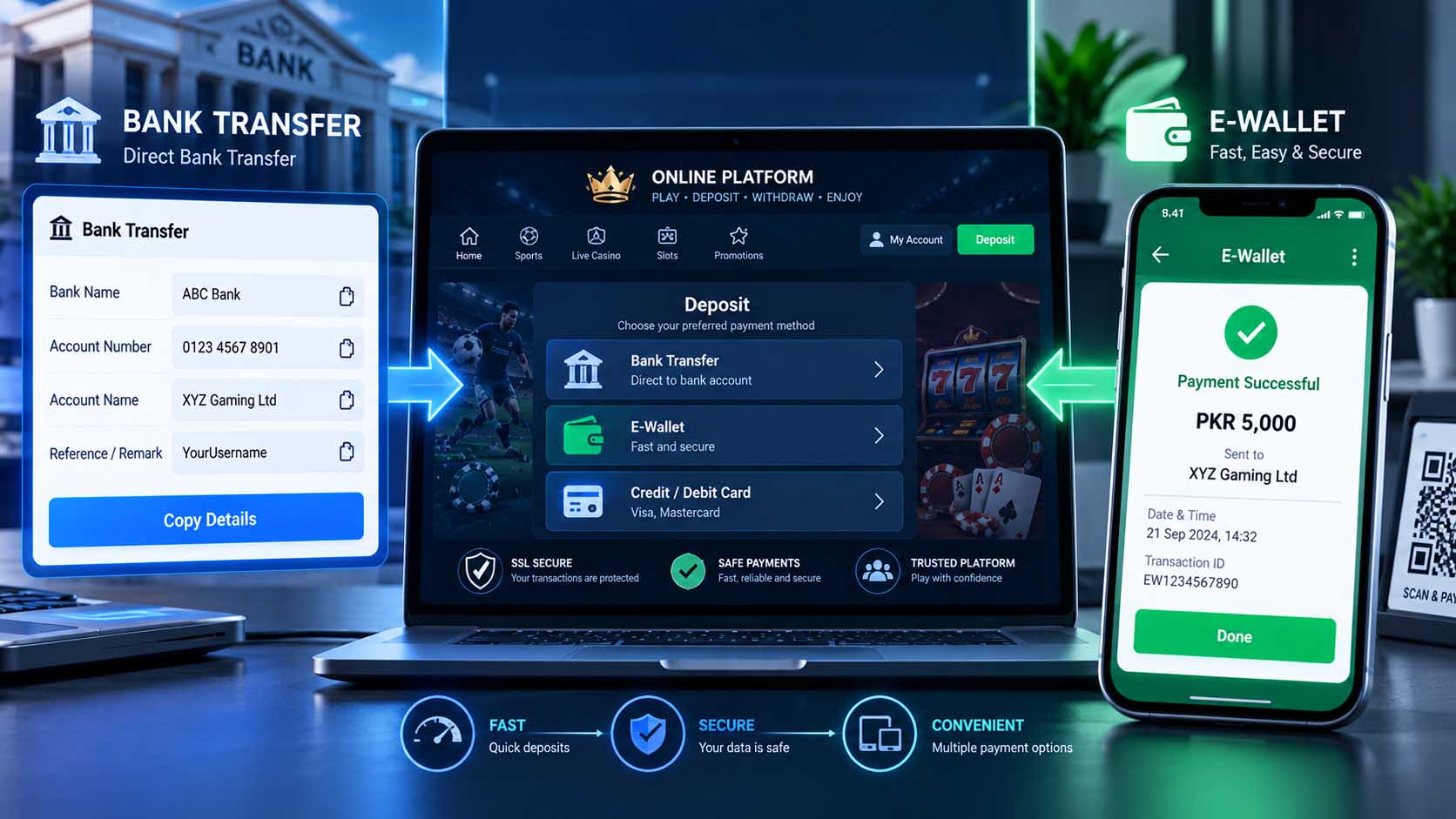
The main difference in bank transfer vs e-wallet payments is how money moves between the user and a digital platform. Bank transfers generally use a bank account and banking network, while e-wallets use a digital wallet account that can act as an intermediary for online transactions. Both methods may support deposits or withdrawals, but processing procedures, limits, fees, and verification requirements can differ.
Understanding these differences is useful whenever a platform offers more than one payment method.
What Is a Bank Transfer?
A bank transfer moves funds from one bank account to another through a banking system.
For an online platform, a user may receive payment instructions containing details needed to complete the transaction. The exact process depends on the bank, payment network, platform, and country.
Bank transfers can involve several pieces of information, such as:
- account or destination details,
- transfer amount,
- transaction reference,
- payment status,
- processing instructions.
Some transfers may be confirmed quickly, while others can require additional processing. Therefore, users should check the specific instructions rather than assuming every bank transaction follows the same timetable.
What Is an E-Wallet?
An e-wallet is a digital payment service that allows users to store or manage payment value through an electronic account.
Depending on the provider, an e-wallet may be connected to a bank account, payment card, mobile number, or another funding source.
Instead of entering traditional bank-transfer information for every transaction, the user may initiate payment through the wallet’s own interface.
The basic structure can be viewed as:
User → E-wallet → Digital platform
compared with:
User’s bank → Banking network → Digital platform
However, the exact transaction route varies by provider.
Bank Transfer vs E-Wallet: What Are the Main Differences?
The two payment methods can accomplish similar goals, but their operating processes are different.
Account Structure
A bank transfer relies primarily on banking account information and the banking network.
An e-wallet relies on an account maintained by the wallet provider. That wallet may itself be funded through a bank account or another supported method.
As a result, an e-wallet can add an additional payment layer between the user’s original funding source and the destination platform.
Transaction Process
Bank transfers may require users to enter destination details and confirm the transfer through their banking service.
E-wallet transactions are generally initiated within the wallet environment, where users choose a destination, amount, or available merchant-payment option.
Neither method has one universal process. Procedures depend on the financial provider and the receiving platform.
Are E-Wallets Always Faster Than Bank Transfers?
Not necessarily.
It can be tempting to assume that every e-wallet transaction is instant and every bank transfer is slow. In practice, transaction speed can depend on multiple factors.
These may include:
- payment provider,
- banking network,
- platform processing procedures,
- transaction verification,
- time or day of the request,
- withdrawal review requirements.
A fast transfer from the user’s payment provider does not necessarily mean that the receiving platform will credit or process it at exactly the same speed.
For this reason, users should check the stated processing information for the specific method they plan to use.
Deposits and Withdrawals May Follow Different Rules
A payment method available for deposits is not automatically available for withdrawals.
Digital platforms can establish separate procedures for adding funds and requesting withdrawals. A platform may also require certain account or transaction information before processing a request.
Users examining current payment options on the Linkbola website should therefore check the platform’s latest payment information rather than assuming that a method, limit, or processing procedure remains unchanged.
This is particularly important when moving between deposit and withdrawal functions.
Fees Can Depend on More Than the Payment Method
There is no universal rule stating that a bank transfer or e-wallet will always be cheaper.
Possible costs can originate from different parts of the transaction. A bank, wallet provider, payment processor, or platform may have its own applicable fee structure.
Currency conversion can also affect the final amount when a transaction involves different currencies.
Before confirming a payment, users should check whether any fees are displayed and determine which party applies them.
Transaction Limits Should Be Checked in Advance
Minimum and maximum transaction amounts can vary.
For example, a platform may establish its own deposit or withdrawal limits while a bank or e-wallet provider applies separate transaction restrictions.
That means two sets of rules can sometimes affect the same payment.
A useful approach is to check both:
Payment provider limits → what the bank or wallet allows
Platform limits → what the receiving service accepts or processes
This can prevent confusion when a transaction falls outside one side’s permitted range.
Why Payment Verification Matters
Digital transactions need enough information to be matched with the correct account and request.
Depending on the platform and payment method, verification can involve checking account information, transaction references, payment status, or other required details.
Users should enter information carefully. Incorrect destination details, mismatched information, or incomplete references may complicate processing.
Sensitive financial credentials should also be protected. Passwords, authentication codes, and other private banking information should not be shared casually with third parties.
Which Is Better: Bank Transfer or E-Wallet?
There is no single answer that applies to every user or platform.
A bank transfer may suit someone who prefers handling transactions directly through a banking service. An e-wallet may suit someone who already uses a supported digital wallet for online payments.
Instead of asking which method is universally better, compare the factors that matter for the specific transaction:
- availability,
- processing procedure,
- stated fees,
- transaction limits,
- deposit support,
- withdrawal support,
- verification requirements.
The most practical option depends on what the payment provider and digital platform currently support.
Check Current Payment Information Before Transacting
Payment systems can change as platforms update providers, transaction rules, limits, or processing procedures.
Therefore, old instructions from third-party pages should not automatically be treated as current. Users should confirm payment information through the relevant platform and their own bank or e-wallet provider before initiating a transaction.
The bank transfer vs e-wallet comparison ultimately comes down to payment infrastructure, convenience, processing procedures, and current transaction requirements. Understanding how each method works makes it easier to interpret deposit and withdrawal options without assuming that one payment system operates exactly like another.