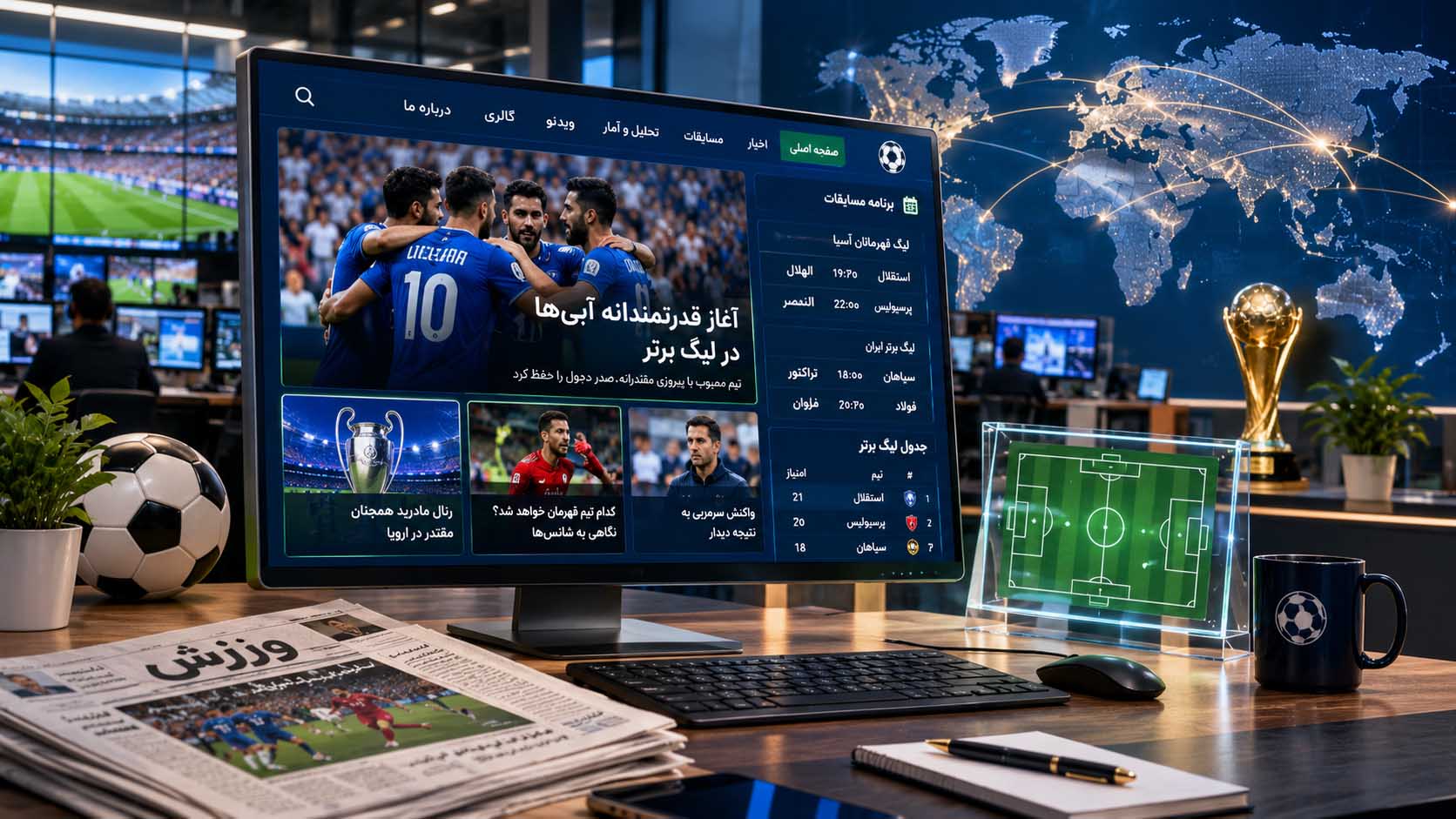
Persian-language football websites have evolved from simple online news publications into diverse digital information resources covering domestic leagues, international competitions, player developments and football analysis.
This evolution reflects changes in internet accessibility and digital journalism. Moreover, it highlights the growing demand for sports information in Persian, also known as Farsi.
In this way, these websites present football subjects in familiar language and cultural contexts. As a result, Persian-speaking audiences can engage more easily with developments across the global football
History of Persian-Language Football Websites
During the earlier stages of online sports journalism, Persian-language football publications primarily focused on written match reports, competition results and translated international news.
Traditional newspapers and sports magazines influenced the structure of these early websites. Articles often followed familiar editorial formats, with separate sections for domestic football, international competitions and player interviews.
As internet access expanded, digital publications began offering more frequent updates and broader coverage. Consequently, readers gained access to football information more quickly.
This transition gradually reduced the dependence on printed sports publications and created new opportunities for independent football journalism.
Persian Football Media and Specialized Sports Content
The development of digital publishing has encouraged Persian-language football websites to explore subjects beyond conventional match reporting.
Today, modern football publications cover several specialized subjects, including tactical analysis, player development, transfer news, competition history and statistical interpretation.
Different categories of websites serve different audience interests:
- Sports news websites covering football developments.
- Statistical resources presenting match and player records.
- Independent publications discussing football tactics.
- Community websites supporting fan discussions.
- Commercial platforms publishing prediction-related material.
For instance, بت ۴۰۴, commonly rendered as BET404 in Latin script, represents a Persian-language resource covering football predictions and commercial platform-related subjects.
These categories demonstrate the diversity of Persian digital football content. However, commercial prediction material should not be confused with independent journalism or verified statistical reporting.
Persian Localization in Digital Football Media
Localization involves adapting digital content to the linguistic, cultural and practical requirements of a particular audience.
For Persian football publications, effective localization extends beyond translating English-language articles.
Publishers must consider right-to-left text presentation, familiar football expressions, appropriate date formats and the correct representation of international player and club names.
For example, several common football terms have recognizable Persian equivalents.
| English football terminology | Persian terminology |
|---|---|
| Football | فوتبال |
| Goal | گل |
| Goalkeeper | دروازهبان |
| League | لیگ |
| Penalty | پنالتی |
| Football match | مسابقه فوتبال |
| Match result | نتیجه مسابقه |
Consistent terminology helps readers understand international football information without unnecessary language barriers.
Furthermore, accurate localization reduces misunderstandings when publications discuss technical sporting concepts. As a result, readers can understand complex football information more easily.
Domestic and International Football Coverage
Persian-language sports media covers football at multiple competitive levels.
Domestic coverage often includes the Persian Gulf Pro League, national team developments and local club competitions. International reporting may focus on major European leagues, global tournaments and prominent football organizations.
Competitions such as the Premier League, La Liga, Bundesliga and UEFA Champions League attract interest beyond their respective geographical regions.
Similarly, FIFA competitions create opportunities for Persian-speaking audiences to follow national teams and international football developments.
In addition, digital publications connect these subjects by presenting information within a shared linguistic environment. Therefore, readers can follow domestic and international competitions through familiar language.
Multimedia in Persian Football Journalism
Digital football coverage increasingly combines written information with visual and interactive media.
Traditional match reports can now appear alongside video summaries, tactical illustrations, player photographs and statistical graphics.
Multimedia presentation offers several advantages. Tactical diagrams can explain team formations more clearly, while interactive tables allow readers to explore competition standings and player records.
Additionally, visual storytelling helps simplify complex football concepts for audiences with different levels of sporting knowledge.
However, publishers must also respect copyright requirements when using match footage, photographs and other protected media.
Online Football Communities and Persian Sports Media
Online football publications have created opportunities for supporters to participate in discussions rather than simply consume information.
Comment sections, discussion forums and social media communities allow fans to exchange opinions about team performances, managerial decisions and competition developments.
These interactions contribute to a more participatory sports media environment.
Nevertheless, community-generated content can introduce rumors, inaccurate interpretations and unverified claims. For this reason, responsible moderation remains important.
Responsible publishers can improve information quality by clearly distinguishing confirmed news, editorial opinions and reader contributions.
Accuracy and Reliability of Persian Football Websites
Language-specific publishing introduces particular editorial challenges.
Player names may have multiple Persian transliterations, while translated reports can lose important context when publishers rely on incomplete source material.
Therefore, accurate football journalism requires careful translation, consistent terminology and appropriate source verification. Additionally, editors should check important claims against reliable sources.
Official competition records and announcements from recognized football organizations can help confirm factual information.
Furthermore, publications should clearly identify sponsored material and distinguish commercial claims from independently established facts, particularly when discussing gambling-related subjects.
Future Trends in Persian-Language Football Media
Emerging technologies continue to influence how publishers create and distribute Persian-language sports information.
Artificial intelligence, automated translation and structured statistical databases can support faster content organization and broader accessibility.
Despite these advantages, these technologies still require editorial oversight. For example, automated systems may misinterpret football terminology or translate names inconsistently. Automated systems may misinterpret football terminology, translate names inconsistently or produce inaccurate summaries.
The future development of Persian digital sports media will therefore depend on balancing technological innovation with linguistic accuracy and responsible journalism.
Conclusion
The evolution of Persian-language football websites demonstrates how digital publishing can connect global sporting information with local linguistic and cultural needs. From early online match reports to specialized multimedia publications, Persian football media has developed into a diverse information ecosystem. Ultimately, accurate localization, transparent editorial practices and reliable source verification will remain essential. As digital publishing continues to develop, these practices will help Persian-language football websites serve audiences around the world.